A Client Stole My Design and Didn't Pay — What to Do
If a client used your design without paying, your strongest position is proving you're the author and when you created it. Gather the correspondence and delivery files, document where your work is being used, and secure a certificate with a trusted date on your authorship declaration. Disputes are won with a traceable trail — not an angry email.
First steps: collect what you already have
- The correspondence. Emails, messages, the quote, the brief — anything showing you produced the design on their request.
- The files and versions. The working file (PSD, AI, Figma), the drafts, the final export. The client has only the end result — you have the whole process.
- Proof of use. A screenshot of the site, post, or product where the design appears, with date and URL.
Why "I made it" isn't enough in a dispute
The problem in a client dispute is that your word against theirs carries no weight unless you can show when the work was created. A working file proves skill, but the file's date is easy to contest. What actually carries weight is an independent, verifiable date placed before the client started using the design.
How to prove the design is yours
| Method | Gives a trusted date? | Weakness |
|---|---|---|
| Working file (PSD, AI, Figma) | No | Shows you made it, but the date is easily contested |
| Email correspondence | Partly | Shows the arrangement, not the exact moment of creation |
| Portfolio / social media post | Partly | Contestable; platform isn't an independent witness |
| Authorship-declaration certificate with a trusted date | Yes | Doesn't make the authorship claim for you — it certifies when and by whom the declaration was made |
StampR issues a certificate that records when and by whom an authorship declaration was made. It isn't a registry and doesn't make the authorship claim for you — but it fixes a moment in time the client can't rewrite. In a payment dispute, that turns "I made it" into "I can show when I made it."
Certify your design — your first certificate with an account is €4.90.
Before the next project, set the timeline up in your favour: how to prove a design is yours — which files and which dates actually carry weight.
Put the engagement on one timeline
A client dispute is easier to follow when the material is ordered by date rather than by type. Build the sequence first, then decide what to date.
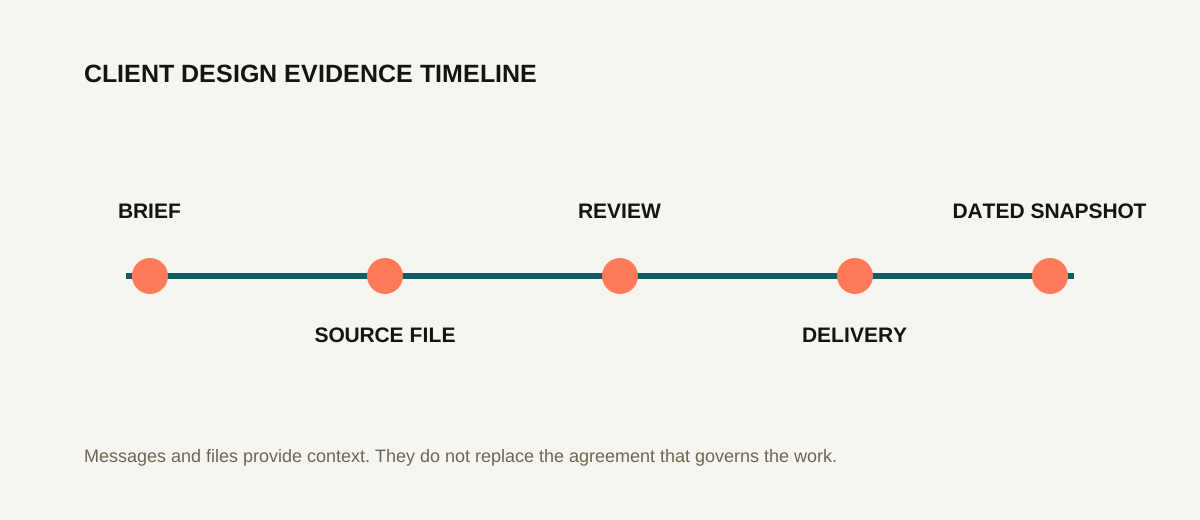
- The brief or request that started the work, with its date.
- Your early drafts and intermediate versions, in the order you made them.
- The feedback and revision requests that show the work went through your process.
- The delivery: what you sent, when, and through which channel.
- The invoice and its payment status.
- The current use: where the design appears now, with URL and capture date.
A timeline shows a sequence of events. It does not by itself establish who holds the rights under your agreement, and it does not decide the payment dispute.
The full designer workflow · Primary source: Figma: version history
For the basics: what a declaration of authorship is, what it proves and what it doesn't.
The wider context: copyright protection — how the right arises, and where it is weak in practice.
Why the date holds up: what a qualified timestamp is under eIDAS — who issues it, how anyone can check it, and what its limits are.
Frequently asked questions
Can I force the client to pay?
That depends on your contract and the law. The certificate doesn't collect the debt for you — but it gives a clearly dated record of your authorship declaration, which is a strong argument in negotiation or with a lawyer.
What if there was no contract?
Then a dated authorship declaration matters even more. Without a contract, correspondence and a dated certificate together build your position.
Does sending a watermarked version help?
Somewhat — it deters theft, but it doesn't prove when you created the original. A dated certificate does exactly that.
When is the best time to issue the certificate?
Before delivery to the client. That gives you a trusted date that precedes any use on their side.
Certify your work with a trusted date.
Create a certificate →Your first certificate is €4.90 with an account.