Someone Stole My Photo — What to Do
If someone is using your photo without permission, the key is proving the shot is yours and that it existed before their use. Document where the photo is being used with a date, gather the original file and the raw frames, and secure a certificate with a trusted date on your authorship declaration. The date settles the dispute — not the complaint.
First steps: do this right away
- Document the infringement. Screenshot the site or post using the photo, with its visible date and URL. Save the link before it's taken down.
- Check where else it's spreading. A reverse image search (Google Lens, TinEye) shows everywhere the shot has been uploaded.
- Gather the original. The RAW file, the full frame series, the edit versions — anything the thief can't possibly own.
Why EXIF data isn't enough
Many photographers rely on EXIF metadata as proof, but it's easily stripped or altered, and its date isn't independently verified. Uploading to social media stamps a date, but the platform isn't a neutral witness and dates can be manipulated. What actually carries weight is an independent, verifiable date placed before the photo appeared anywhere public.
How to prove the photo is yours
| Method | Gives a trusted date? | Weakness |
|---|---|---|
| EXIF metadata | No | Easily stripped or altered; date isn't independently verified |
| RAW file / original series | No | Shows you took it, not when the shot was taken |
| Social media post date | Partly | Contestable; platform isn't an independent witness |
| Authorship-declaration certificate with a trusted date | Yes | Doesn't make the authorship claim for you — it certifies when and by whom the declaration was made |
StampR issues a certificate that records when and by whom an authorship declaration was made. It isn't a registry and doesn't make the authorship claim for you — but it fixes a moment in time the other side can't rewrite. In a dispute, that's the difference between "this is my photo" and "I can show when I took it."
Certify your photo — your first certificate with an account is €4.90.
For the next shoot, build the evidence before you publish: how to prove a photo is yours — what to keep, and when to date it.
Capture the infringement before it disappears
A page using your photo can be edited or taken down within hours. Capture it in a fixed order, and record when you captured it.
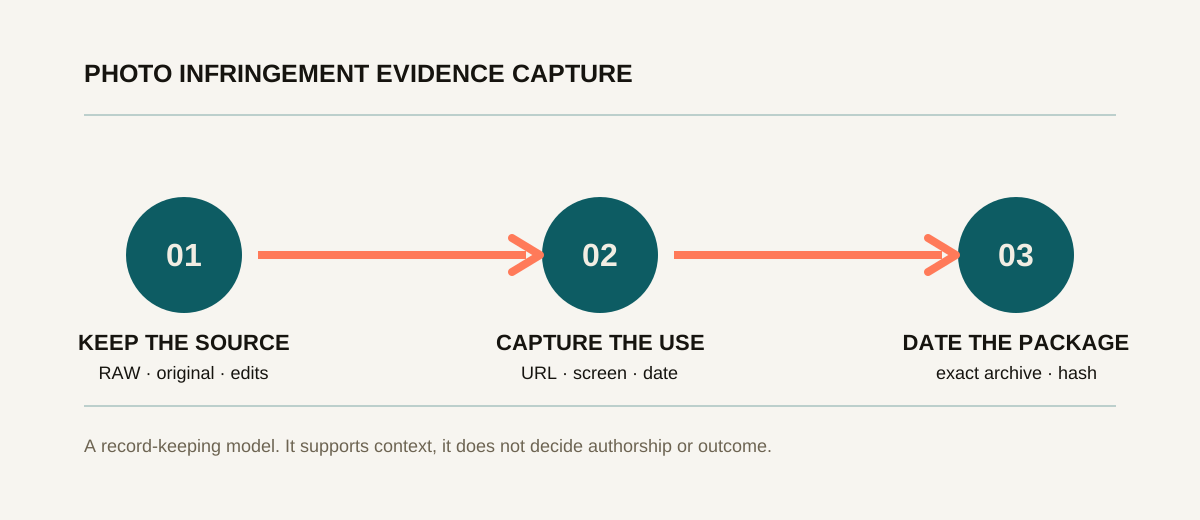
- A full-page screenshot showing the image, the surrounding page and any visible date.
- The exact URL as text, plus the account, shop or company behind it.
- An independent archive snapshot of the page, so the capture does not rest on your screenshot alone.
- Your original: the RAW or camera file and the neighbouring frames from the same session.
- Any correspondence — a licence request, a refused quote, an earlier delivery to someone else.
- One exact file chosen as your reference version, then a dated record for that file.
A capture set records what was public and when you saw it. It does not identify who uploaded it, establish who holds the rights, or decide a dispute.
The full photographer workflow · Primary source: Internet Archive: saving a page in the Wayback Machine
For the basics: what a declaration of authorship is, what it proves and what it doesn't.
The wider context: copyright protection — how the right arises, and where it is weak in practice.
Why the date holds up: what a qualified timestamp is under eIDAS — who issues it, how anyone can check it, and what its limits are.
Frequently asked questions
Does EXIF data prove the photo is mine?
Not on its own. EXIF is easily edited and its date isn't independently verified. A certificate with a trusted date carries far more weight.
Does the Facebook or Instagram post date help?
Partly, but it's contestable and depends on the platform. An independent dated certificate is stronger, especially if made before the post.
What if the thief cropped or edited the photo?
The original series and an earlier trusted date remain strong arguments, even when the final image has been altered.
When is the best time to issue the certificate?
Before you upload the photo publicly. That gives you a trusted date that precedes any use by others.
Certify your work with a trusted date.
Create a certificate →Your first certificate is €4.90 with an account.