Someone Stole My Beat — How to Prove It's Mine
If someone uploaded your beat as their own, the thing that settles it is proving your version existed before theirs. Gather your project files and stems, document where the stolen version was posted (with its date), and secure a certificate with a trusted date on your authorship declaration. The date wins the dispute — not the angry comment.
The first 24 hours: do this now
- Document the theft. Screenshot the upload with its visible date and URL. Save the link before they take it down.
- Collect what you already have. The project file (FLP, ALS, Logic session), the individual stems, the WAV bounce, even rough drafts — anything the other person can't reproduce.
- Don't delete anything and don't start a public fight. Emotion isn't evidence. A date is.
- For musicians and producers — what to certify before you release it.
Why "I made it first" isn't enough
The problem with music theft is that two files sound identical — it's hard to prove who was first. Uploading to YouTube or social media stamps a date, but it's easy to contest: post dates can be manipulated, and the platform isn't a neutral witness. What carries weight is an independent, verifiable date placed before you released the beat anywhere.
How to prove the beat is yours
| Method | Gives a trusted date? | Weakness |
|---|---|---|
| Stems / project file only | No | Proves skill, not when it was made |
| Social media post date | Partly | Contestable; platform isn't an independent witness |
| Emailing it to yourself | Weak | Easily manipulated; courts distrust it |
| Authorship-declaration certificate with a trusted date | Yes | Doesn't do the authorship claim for you — it certifies when and by whom the declaration was made |
StampR issues a certificate that records when and by whom an authorship declaration was made. It isn't a registry and doesn't make the authorship claim for you — but it fixes a moment in time the other side can't rewrite. In a dispute, that's the difference between "I claim" and "I can show."
Certify your beat — your first certificate with an account is €4.90.
Assemble the pack before you make contact
Collect the material as one set before you contact the other party or the platform. Afterwards, files get moved and uploads disappear.
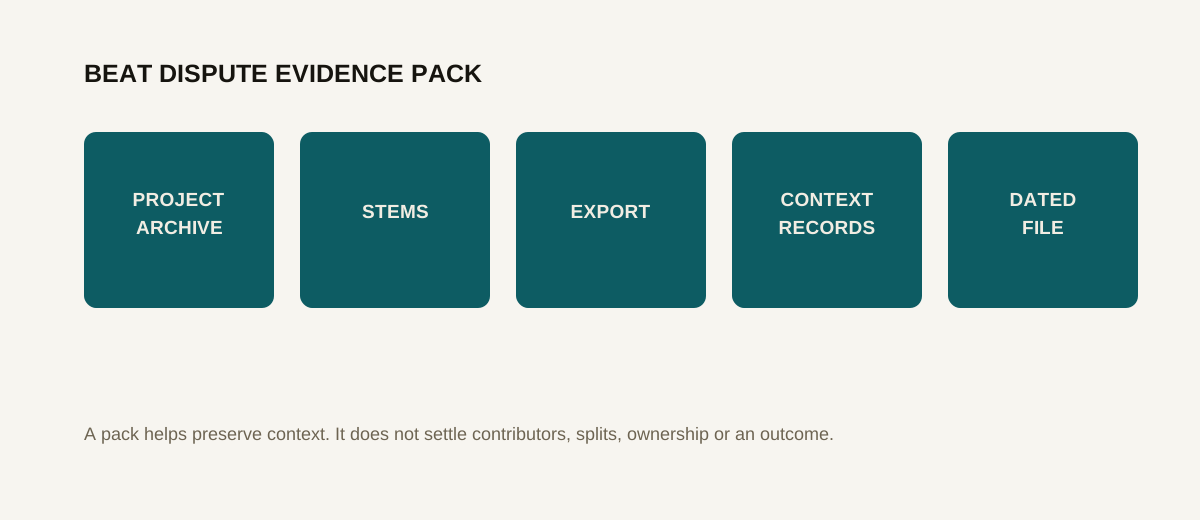
- The project archive with its samples and presets collected into the folder, not just the session file.
- The stems, exported track by track.
- The bounce or master you actually shared.
- The context: messages, session dates, collaborators — anything showing the track passing through your hands over time.
- The other upload: screenshot, URL and visible date, saved before it can be removed.
- A dated record of the one exact file you treat as your reference version.
A pack preserves context. It does not identify contributors, settle splits, establish who owns the recording, or decide the outcome.
The full workflow for musicians · Primary source: FL Studio: project and zipped-project formats
For the basics: what a declaration of authorship is, what it proves and what it doesn't.
The wider context: copyright protection — how the right arises, and where it is weak in practice.
Frequently asked questions
If I upload the beat to YouTube, does that prove it's mine?
It stamps a date, but the date is contestable and depends on the platform. An independent certificate with a trusted date carries more weight, especially if made before the upload.
Does emailing it to myself work?
Weakly. Email metadata is easy to manipulate and is rarely treated as serious evidence.
What if they already registered the beat somewhere?
An earlier trusted date is still a strong argument. That's why it's important to certify your work as early as possible — ideally before the first release.
Do I need a lawyer?
Not for the certification itself. If the dispute escalates to court, the early-dated evidence is exactly what a lawyer will use.
Certify your work with a trusted date.
Create a certificate →Your first certificate is €4.90 with an account.