Was ist qualifiziertes Zeitstempeln – und warum ist es wichtig für den Urheberrechtsnachweis?
Artikel 41 Absatz 2 der Verordnung (EU) Nr. 910/2014 (eIDAS) bestimmt, dass für einen qualifizierten elektronischen Zeitstempel „die Vermutung der Richtigkeit des Datums und der Uhrzeit, das bzw. die er angibt, sowie der Unversehrtheit der mit dem Datum und der Uhrzeit verbundenen Daten“ gilt. Das ist die gesamte rechtliche Vermutung: wann die Daten vorlagen und dass sie sich seitdem nicht geändert haben. Sie vermutet nichts darüber, wer das Werk geschaffen hat, wem die Rechte daran zustehen oder ob es originell ist.
Ein Blockchain-Zeitstempel ist nicht automatisch dieselbe Rechtskategorie. Artikel 42 Absatz 1 verlangt, dass ein qualifizierter Zeitstempel von einem qualifizierten Vertrauensdiensteanbieter ausgestellt und mit dessen fortgeschrittener elektronischer Signatur oder dessen Siegel signiert wird, auf Grundlage einer an die koordinierte Weltzeit gebundenen Zeitquelle. Ein Eintrag in einem öffentlichen Register erfüllt in der Regel keine dieser Bedingungen und erlangt daher die Vermutung nach Artikel 41 Absatz 2 nicht — wobei ihm nach Artikel 41 Absatz 1 die Rechtswirkung und die Zulässigkeit als Beweismittel in Gerichtsverfahren nicht allein deshalb abgesprochen werden darf, weil er elektronisch oder nicht qualifiziert ist.
Qualifizierte elektronische Zeitstempel (Qualified Electronic Time Stamp, QeTS) sind ein kryptografisches Verfahren, das Datum und Uhrzeit untrennbar mit einem digitalen Dokument verbindet – beglaubigt durch einen akkreditierten Dritten. Das Ergebnis ist ein Time-Stamp Token (TST): ein nach RFC 3161 signiertes Paket mit dem SHA-256-Hash der Datei, der koordinierten Weltzeit (UTC) und dem Zertifikat des Vertrauensdiensteanbieters (TSA).
Wie es technisch funktioniert
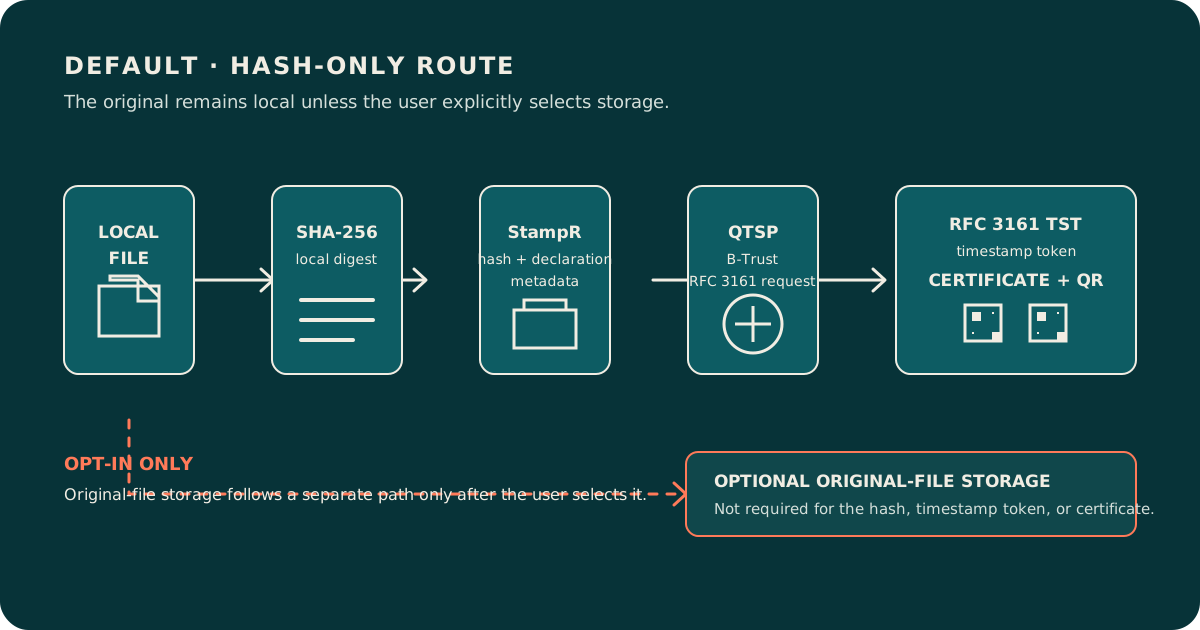
Standardmäßig wird der SHA-256-Hash lokal in Ihrem Browser berechnet, und an den Server werden nur der Hash und die Zertifizierungsdaten übertragen – die Datei selbst wird nicht hochgeladen. Das Original wird nur hochgeladen, wenn Sie die optionale Einstellung „Hochgeladene Datei speichern“ ausdrücklich auswählen. Der Hash geht an BORICA – B-Trust, einen qualifizierten Vertrauensdiensteanbieter auf der EU Trust List, der einen mit seinem qualifizierten Zertifikat signierten TST zurückgibt. StampR verbindet den TST mit Ihrer Urhebererklärung und stellt ein PDF-Zertifikat mit QR-Code zur öffentlichen Prüfung aus.
Rechtliche Stellung nach eIDAS
Verordnung (EU) Nr. 910/2014 (eIDAS), Artikel 41 Absatz 2, bestimmt, dass für einen qualifizierten elektronischen Zeitstempel die Vermutung der Richtigkeit des Datums und der Uhrzeit, die er angibt, sowie der Unversehrtheit der mit Datum und Uhrzeit verbundenen Daten gilt. Artikel 41 Absatz 1 ergänzt, dass einem elektronischen Zeitstempel die Rechtswirkung und die Zulässigkeit als Beweismittel in Gerichtsverfahren nicht allein deshalb abgesprochen werden dürfen, weil er in elektronischer Form vorliegt.
Die praktische Folge betrifft die Beweislast: Die Vermutung gilt, bis die Gegenseite sie widerlegt, und sie erfasst zwei Dinge – Datum und Uhrzeit sowie die Unversehrtheit der Daten. Welches Gewicht dieses Beweismittel hat und ob es im Einzelfall ausreicht, beurteilt das Gericht nach nationalem Verfahrensrecht.
Was er belegt und was nicht
Artikel 3 Nummer 33 eIDAS definiert einen elektronischen Zeitstempel als Daten, die andere Daten mit einem bestimmten Zeitpunkt verknüpfen und „dadurch den Nachweis erbringen, dass die Letzteren zu diesem Zeitpunkt vorhanden waren“. Das beschreibt seinen Umfang genau:
- Er belegt: dass ein bestimmter Hashwert zu einem bestimmten Zeitpunkt existierte und die zugehörigen Daten seitdem nicht verändert wurden.
- Er belegt nicht: wer das Werk geschaffen hat, wem die Rechte daran zustehen, ob es originell ist oder ob eine Rechtsverletzung vorliegt.
Das Urheberrecht entsteht automatisch mit der Schaffung des Werkes und wird nicht registriert. Ein StampR-Zertifikat dokumentiert, wann und von wem eine Urhebererklärung abgegeben wurde – es begründet oder registriert keine Rechte und garantiert keinen Ausgang eines Rechtsstreits. Mehr dazu unter Urheberschaftsnachweis in Bulgarien.
RFC 3161 und ETSI EN 319 422
RFC 3161 ist der Internetstandard, der das Anfrage-/Antwortprotokoll zwischen Client und TSA definiert. ETSI EN 319 421 und EN 319 422 sind die europäischen Profile auf Basis von RFC 3161 und ergänzen Anforderungen an Audit, Schlüsselsicherheit und Langzeitgültigkeit. Der TST von B-Trust erfüllt beide Normen, was eine unabhängige Prüfung mit jedem Standardwerkzeug erlaubt.
Unterschied zwischen einfachem und qualifiziertem Zeitstempel
Ein einfacher Zeitstempel (Servermetadaten, ein Blockchain-Eintrag) stammt nicht von einem qualifizierten Anbieter und genießt keine automatische Vermutung nach Artikel 41 Absatz 2. Der qualifizierte eIDAS-Zeitstempel ist der einzige, dem die Verordnung diese Vermutung zuspricht, und nach Artikel 41 Absatz 3 wird er in allen Mitgliedstaaten als qualifiziert anerkannt.
Qualifizierten Zeitstempel bei StampR erstellen – das erste Zertifikat kostet 4,90 € mit einem kostenlosen Konto (danach 6,80 €), in unter 2 Minuten.
Häufig gestellte Fragen
- Was ist ein qualifizierter elektronischer Zeitstempel?
- Ein Zeitstempel, der von einem qualifizierten Vertrauensdiensteanbieter nach Verordnung (EU) Nr. 910/2014 (eIDAS) ausgestellt wird. Er verbindet den SHA-256-Hash einer Datei kryptografisch mit einem genauen UTC-Zeitpunkt nach RFC 3161. Nach Artikel 41 Absatz 2 gilt für ihn die Vermutung der Richtigkeit von Datum und Uhrzeit sowie der Unversehrtheit der zugehörigen Daten.
- Worin unterscheidet er sich von einem einfachen Zeitstempel?
- Ein einfacher Zeitstempel stammt nicht von einem qualifizierten Anbieter und genießt keine automatische Rechtsvermutung. Der qualifizierte eIDAS-Zeitstempel hat sie und wird in allen EU-Mitgliedstaaten anerkannt.
- Was ist RFC 3161?
- Der Internetstandard, der das Time-Stamp-Protokoll definiert – das Anfrage- und Antwortprotokoll zwischen Client und Time Stamping Authority. Er legt auch das Format des Time-Stamp Token (TST) mit Hash, Zeit und TSA-Signatur fest.
- Beweist ein Zeitstempel, dass das Werk von mir stammt?
- Nein. Er belegt, dass ein bestimmter Hashwert zu einem bestimmten Zeitpunkt existierte und die Daten seitdem unverändert sind. Wer das Werk geschaffen hat und wem die Rechte zustehen, sind eigenständige Fragen, die mit anderen Mitteln belegt werden – Arbeitsdateien, Korrespondenz, Versionsverlauf.
- Wird meine Originaldatei hochgeladen?
- Standardmäßig nicht – der Hash wird lokal im Browser berechnet und nur er wird übertragen. Die Datei wird nur hochgeladen und gespeichert, wenn Sie die Option „Hochgeladene Datei speichern“ ausdrücklich auswählen.
- Ist ein Blockchain-Zeitstempel einem qualifizierten Zeitstempel nach eIDAS gleichwertig?
- Nicht automatisch. eIDAS knüpft die Rechtswirkung an einen Dienst, der Artikel 42 Absatz 1 erfüllt und von einem qualifizierten Anbieter aus einer Vertrauensliste erbracht wird, nicht an eine Technologie. Ein Eintrag in einer öffentlichen Blockchain erfüllt regelmäßig weder die Anforderung einer an die UTC gebundenen Zeitquelle noch die der Signatur eines qualifizierten Anbieters und trägt daher nicht die Vermutung nach Artikel 41 Absatz 2. Beides kann als Beweismittel eingeführt werden; der Unterschied liegt in der Beweislast.